
Minerva — Undergrad
Seeking Curious: "Are you ready to be challenged?"
How a mysterious postcard and a puzzle-shaped website drove a 60%+ engagement rate and ~1,000 high-quality applicants in its first year at Minerva.
Founding student & outreach lead · growth · campaign · zero-to-one · higher education
Situation
I spent my four years in college building a university as a founding student and an employee at Minerva, a new undergraduate institution designed to solve the problems higher education had stopped addressing. One of those problems was outreach. After a year inside Minerva’s outreach program, our applicant numbers were climbing, but applicant quality wasn’t.
Minerva was already the most selective undergraduate program in the world, more selective than Harvard, Stanford, MIT, and our scarcity problem wasn’t leads. It was finding the right students: high-achieving, intellectually curious teenagers who would thrive inside an unconventional program and stay.
The question I kept returning to: how do you increase applicant quality without increasing applicant volume?
Problem
The higher-ed outreach playbook is uniformly terrible. Every elite university sends the same glossy brochure to the same College Board lists. The best students receive literal stacks of pamphlets every week, all saying roughly the same thing (“you’re special, come visit”). The result is learned numbness. The students most worth recruiting are the least likely to read any of it.
Two constraints I had to respect:
- Budget. I was one person with a small experimental line item, not a $10M brand campaign.
- Ethics. Whatever I built couldn’t be deceptive in a way that would break trust once the reveal happened. Students had to enjoy discovering it was us.
What I did
I created Seeking Curious, a global outreach program built around one insight: the best signal of “fit” isn’t a polished essay, it’s whether a student will engage with something unexpected.
The mechanics, roughly in the order we built them:
- Identified candidates. Bought targeted College Board lists and scraped public lists of Olympiad champions and national-level academic competitors. Net was narrow by design. I wanted fewer, better candidates than a wide sweep.
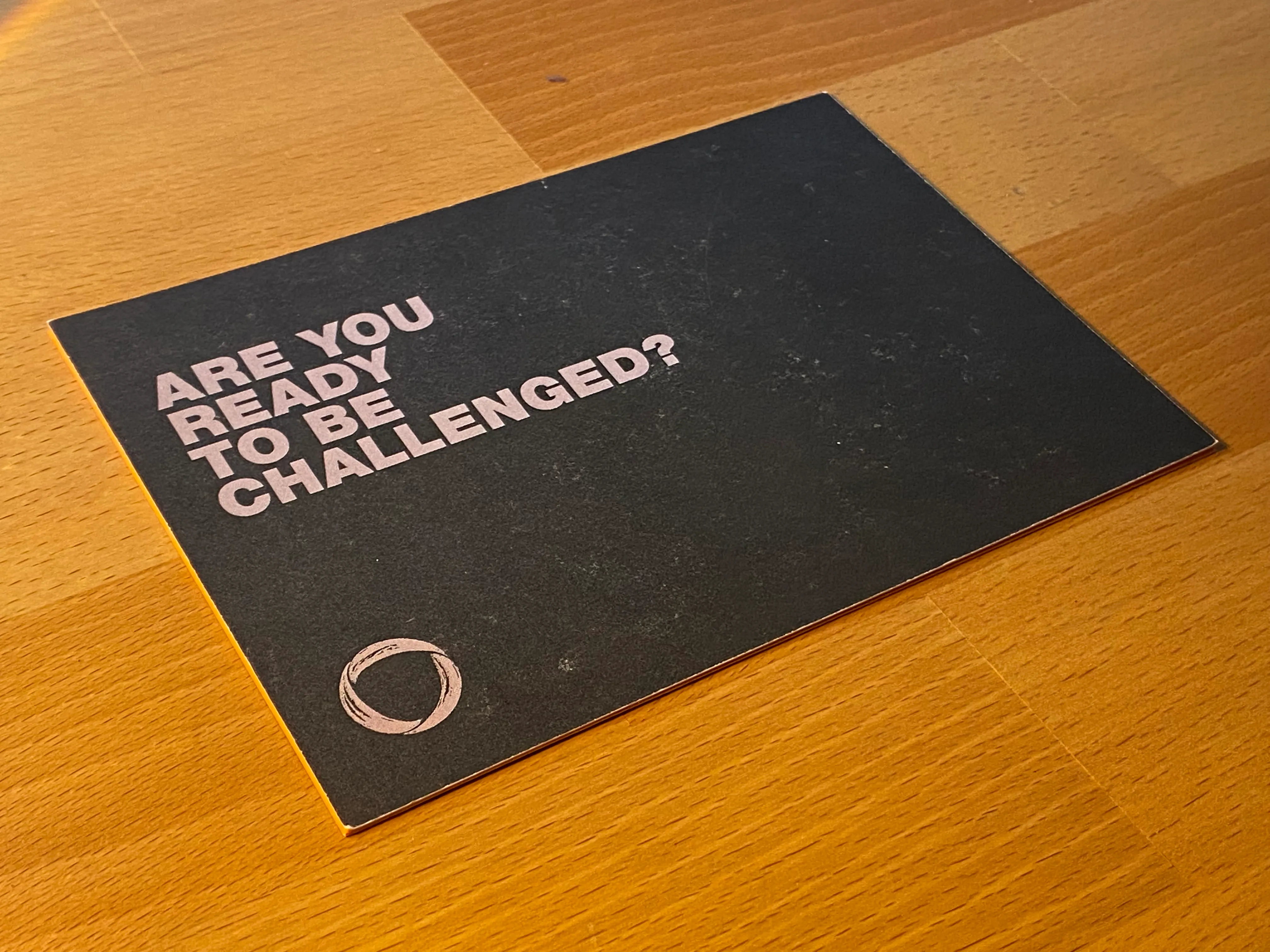
- Sent mysterious mail. A minimalist black postcard. No university name. No pitch. Front: “ARE YOU READY TO BE CHALLENGED?” Back: a pattern-recognition puzzle and a URL, seekingcurio.us. The Minerva owl was present as a small mark on the card, but the university was otherwise unlabeled.
- Built a staged website. The site hosted the challenge in stages. The first step was the pattern-recognition challenge that continued the card’s visual motif. Solving it unlocked “Step One”, a short message that the real test wasn’t solving the puzzle, it was whether they had the curiosity to try in the first place. The final step was a Knights-and-Knaves logic riddle paired with a contact form, which unlocked access to the final challenge.
- Revealed the source. Only after engaging with the challenge did students learn the puzzles were structurally similar to Minerva’s own admissions assessment, and that the “challenger” was a university they’d almost certainly never heard of. That reveal was the hook: a lot of the students who later applied said they’d never have opened a brochure, but they couldn’t not try to solve the card.
- Tested before scaling. I ran the full experience with a few dozen students first, iterated copy and puzzle design based on where they got stuck or lost interest, then piloted with a few hundred before the global rollout.
- Automated the funnel. Once the prototype converted, I built data-collection automation so the program could scale to thousands of targeted students and run without my week-to-week involvement.
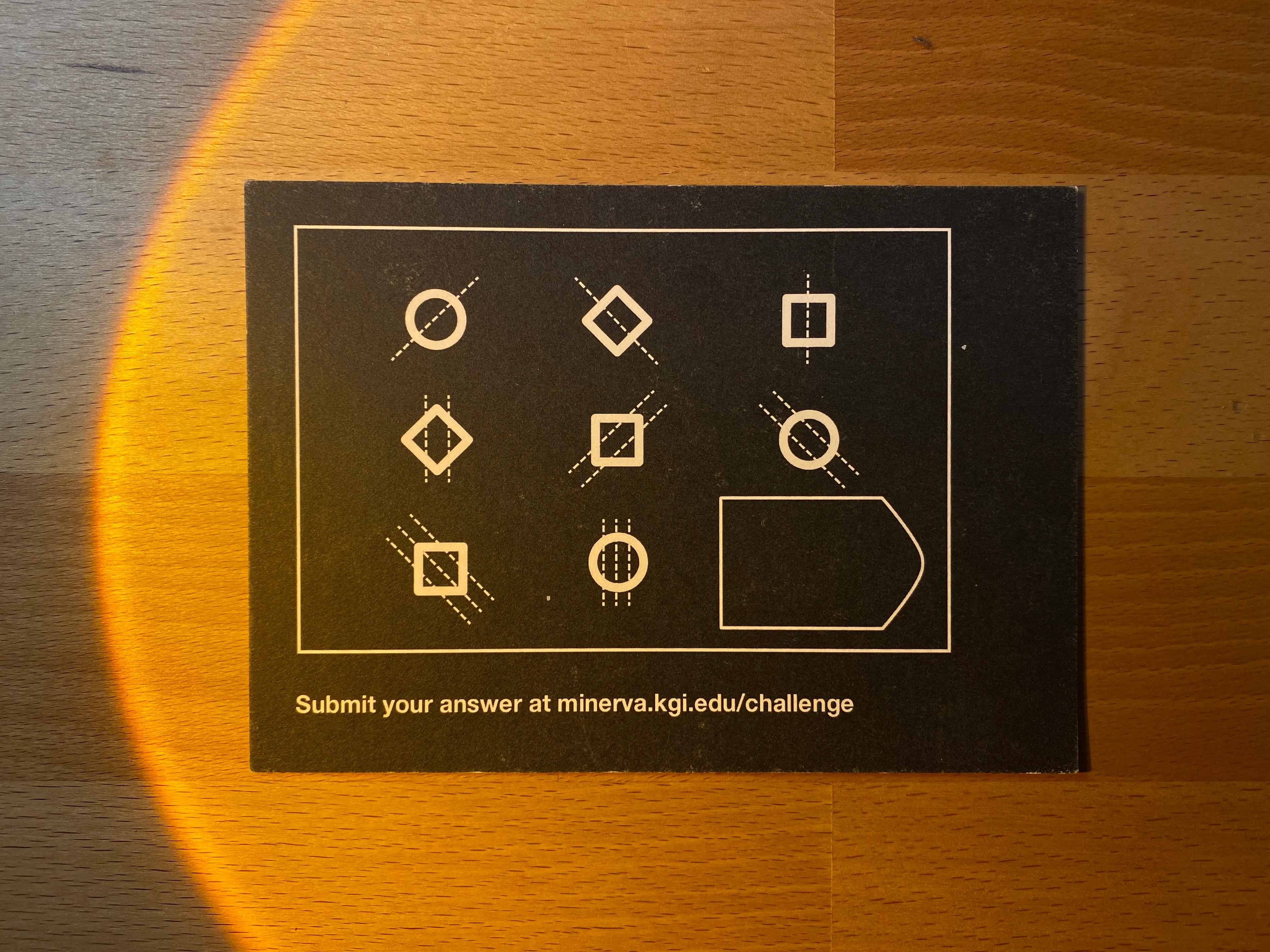
The address listed on the original cards was seekingcurio.us. The version using Minerva’s actual web address was a later edition, used at IRL events and in follow-up outreach to students who already knew Minerva.
Results
- 60%+ engagement rate on the full challenge flow, students who received the card and completed at least the first puzzle on the site.
- ~1,000 additional high-quality applicants in the program’s first year, by the “high-quality” definition our admissions team was already using (a blend of academic record, test performance, and our own assessment).
- Near-100% application rate among students who made it to the reveal. By the time they learned it was a university, they were already invested in the puzzle and were intrigued that a university would engage with them on those terms.
- Durable system. The program continued running after I stopped operating it day-to-day, because the data collection and targeting had been automated from the start.
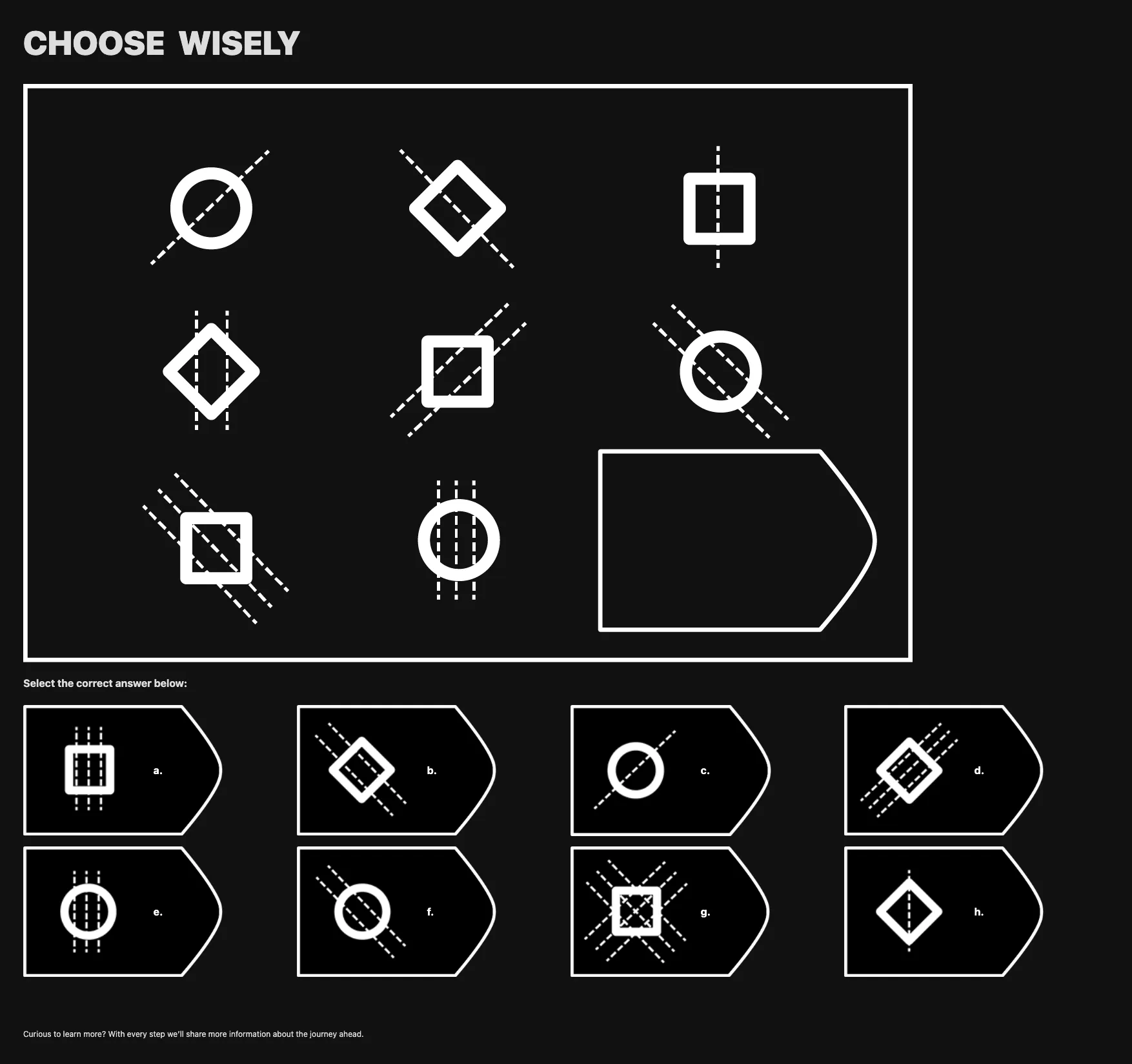
Step one — the pattern-recognition challenge.
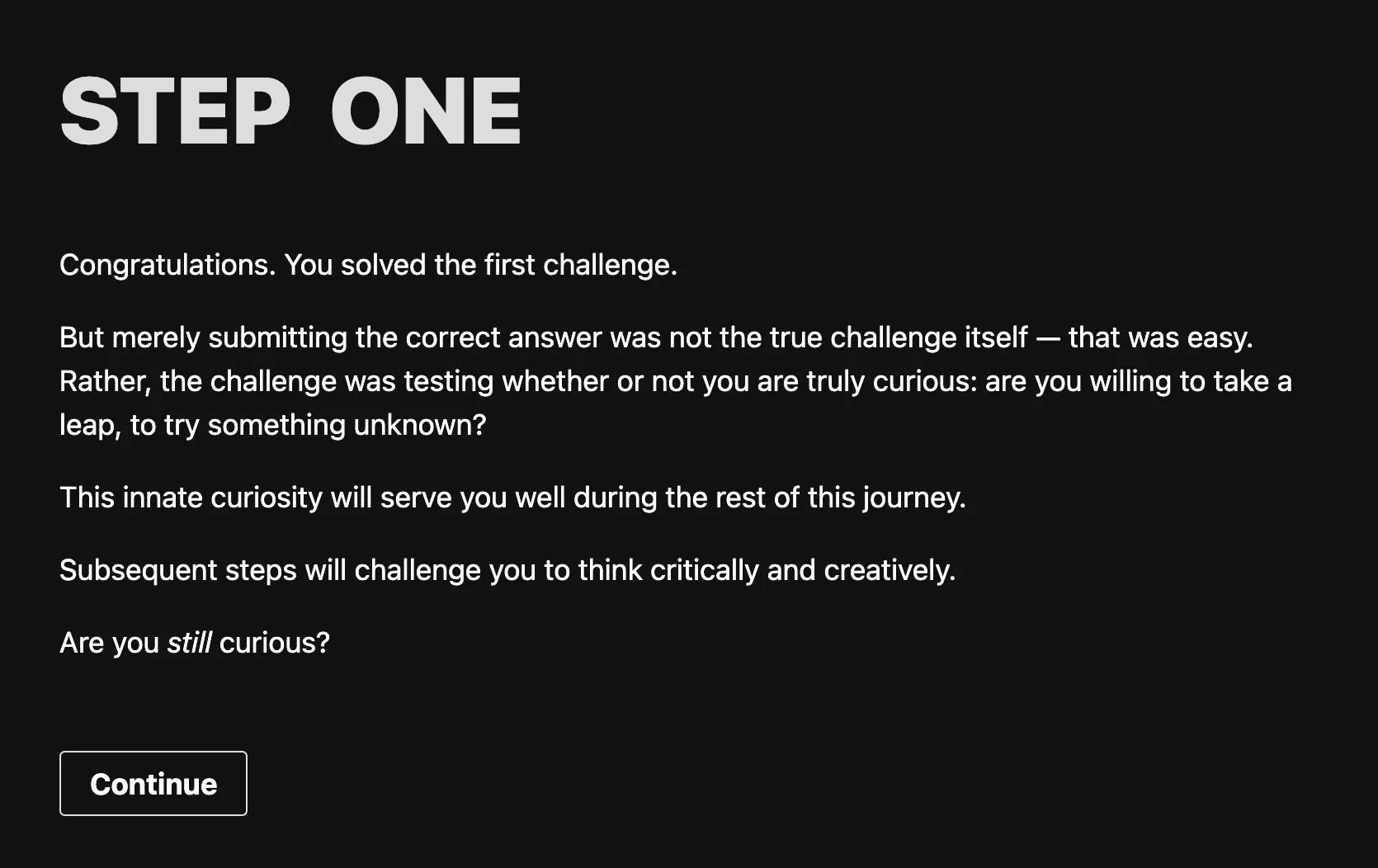
The reveal after solving.
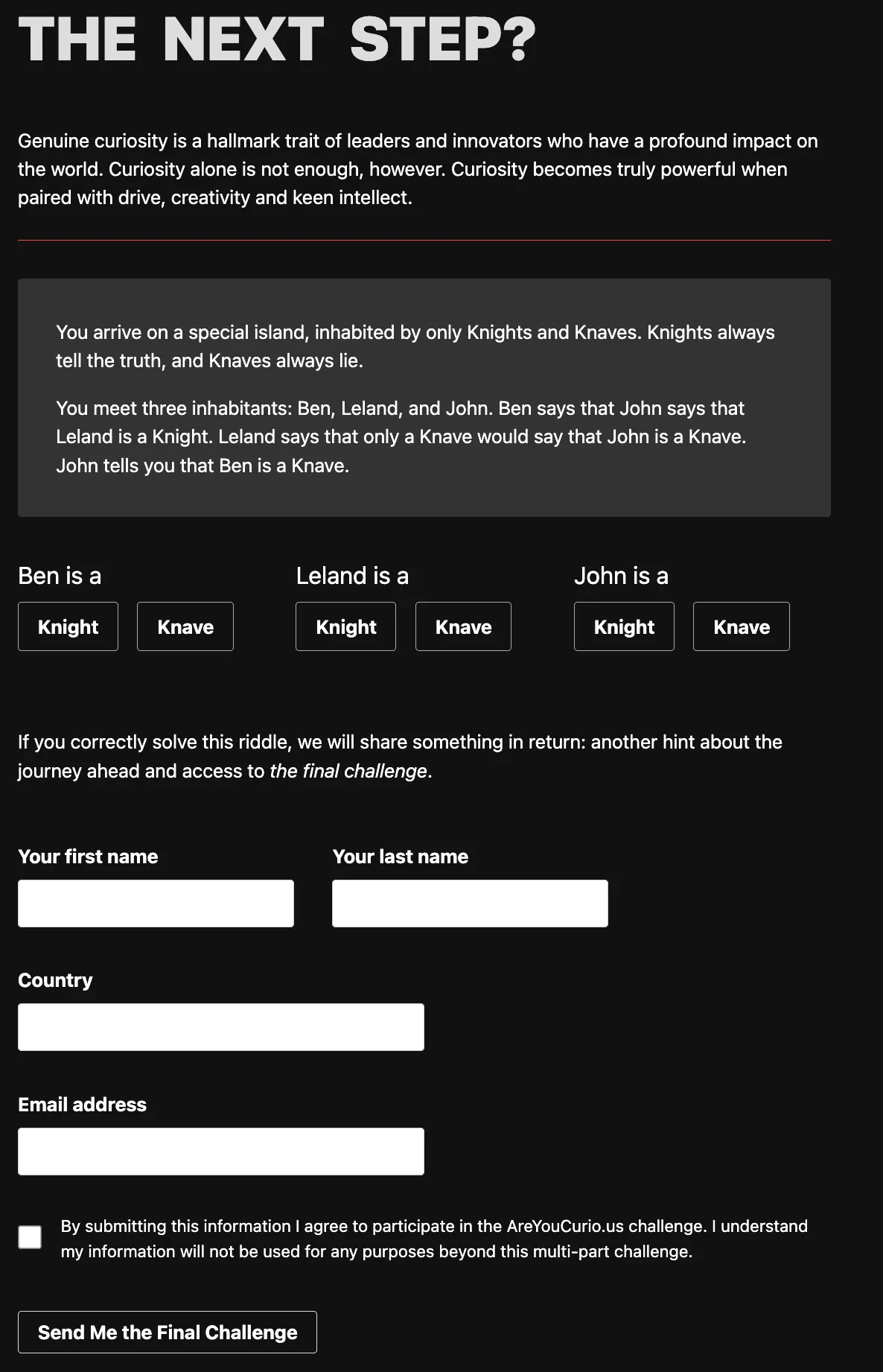
The final step — Knights and Knaves + contact form.
Lesson applied
Three things I took from Seeking Curious that I’ve reused in every growth program since:
- Start with the wrong problem, find the real one. The brief was “get more applicants.” The correct brief was “get more of the right applicants.” If I’d built the program against the first framing, I’d have landed on a broader, cheaper campaign that would have measurably failed on the metric that actually mattered.
- Make the mechanic indistinguishable from the signal. The puzzle wasn’t a gimmick on top of outreach, it was the outreach. It self-selected the audience we wanted, so every student who completed it was pre-qualified by the same behaviors that predicted success inside the program. The best growth mechanics are audience filters in disguise.
- Prototype on tens, pilot on hundreds, scale to thousands. Growth programs fail quietly when you skip the middle step. The cost of testing with a few dozen students was almost zero; the cost of testing at scale with a broken reveal would have been high.
Seeking Curious is still live at seekingcurio.us.